CompactLogix Communication Modules

News

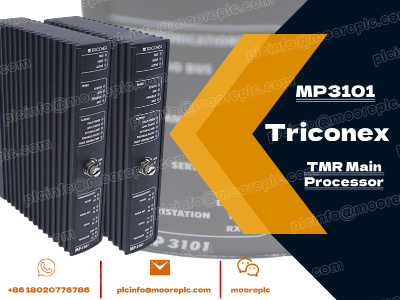
  • Understanding the Triconex MP3101 Trident Redundant Processor Module: A Comprehensive Guide
    Understanding the Triconex MP3101 Trident Redundant Processor Module: A Comprehensive Guide
    March 11, 2025

    Introduction to the Triconex MP3101 Trident Redundant Processor Module The Triconex MP3101 Trident Redundant Processor Module is a high-performance, reliable, and robust processor module designed for critical industrial applications. Manufactured by Triconex, a trusted name in safety and control systems, the MP3101 is engineered to deliver exceptional processing power and redundancy, ensuring uninterrupted operation in demanding environments. This module is widely used in industries such as oil and gas, power generation, and chemical processing, where system reliability and safety are paramount. Key Features of the MP3101 Processor Module The Triconex MP3101 boasts an impressive array of features that make it a standout choice for industrial control systems. At its core, the module is powered by dual Motorola MPC860 processors, each running at 32-bit and 50 MHz. This dual-processor design ensures redundancy and fault tolerance, critical for maintaining system integrity. The module includes 6 MB of Flash PROM for storage of SX, 10X, and control applications, protected by CRC for data integrity. It also features 16 MB of DRAM for SX control application execution and program storage, along with 8 KB of NVRAM for retentive variables. Additionally, the MP3101 is equipped with 16 MB of DRAM for 10X execution and 128 KB of shared memory for seamless communication between processors. Technical Specifications and Performance The Triconex MP3101 is designed to operate efficiently under a wide range of conditions. It supports a nominal input voltage of 24V DC, with an operational voltage range of 19.2V to 30V DC, including a 5% AC ripple tolerance. This flexibility ensures stable performance even in environments with fluctuating power supplies. The module has a maximum logic power consumption of 8 W, making it energy-efficient while delivering high processing power. It can withstand an absolute maximum input voltage of 33V DC and a reverse input voltage of -0.6V DC, ensuring durability and protection against electrical anomalies. Applications of the MP3101 in Industrial Settings The Triconex MP3101 is ideally suited for applications where system reliability and safety are non-negotiable. Its redundant processor design and robust memory architecture make it a perfect fit for: Safety Instrumented Systems (SIS): Ensuring fail-safe operation in critical processes. Process Control Systems: Managing complex industrial processes with precision. Emergency Shutdown Systems (ESD): Providing rapid and reliable shutdown capabilities in emergencies. Fire and Gas Detection Systems: Monitoring and responding to hazardous conditions in real-time. Conclusion The Triconex MP3101 Trident Redundant Processor Module is a powerful, reliable, and versatile solution for industrial control and safety systems. Its advanced features, robust design, and exceptional performance make it an ideal choice for industries that demand the highest levels of reliability and safety. Whether you’...

    Read More
  • Understanding the GE IS220PPROH1A Backup Turbine Protection (PPRO) I/O Pack
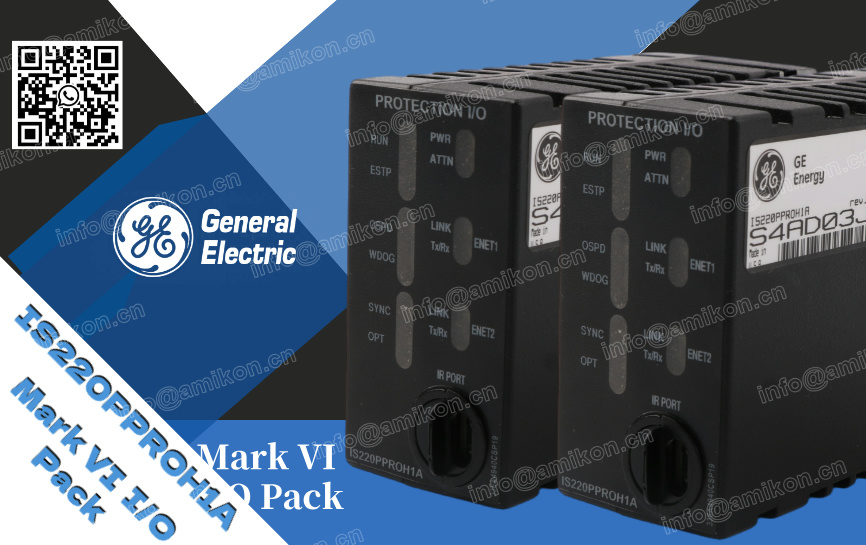
    Understanding the GE IS220PPROH1A Backup Turbine Protection (PPRO) I/O Pack
    March 10, 2025

    What is the GE IS220PPROH1A Backup Turbine Protection (PPRO) I/O Pack? The GE IS220PPROH1A is a specialized Backup Turbine Protection (PPRO) I/O pack designed by General Electric (GE) to ensure the safety and reliability of turbine operations. This advanced system provides an independent backup overspeed protection mechanism and serves as a critical component in safeguarding turbines from potential failures. Additionally, it offers a backup check for generator synchronization to a utility bus, ensuring seamless integration with power grids. The IS220PPROH1A is a vital part of modern turbine protection systems, offering redundancy and reliability in demanding industrial environments. Key Features of the IS220PPROH1A PPRO I/O Pack The IS220PPROH1A is packed with features that make it an essential component for turbine protection. Some of its standout features include: Independent Overspeed Protection: Provides a backup system to detect and prevent turbine overspeed, a critical safety measure. Generator Synchronization Check: Ensures proper synchronization of the generator with the utility bus, preventing potential grid disturbances. Watchdog Function: Acts as an independent monitor for the primary control system, enhancing overall system reliability. Triple Modular Redundancy (TMR): Offers high reliability through redundant configurations, minimizing the risk of failure. These features make the IS220PPROH1A a robust solution for turbine protection in power generation facilities. How Does the IS220PPROH1A Work? The IS220PPROH1A operates as part of a larger protection system, typically consisting of three TMR (Triple Modular Redundant) PPRO I/O packs. These packs are mounted on either a simplex protection (SPRO) terminal board or a TMR TPROH#C terminal board. Each terminal board is connected to an emergency trip board via a DC-37 pin cable, ensuring secure and reliable communication. The system is designed to work in conjunction with specific terminal boards, such as: TREG: Gas Turbine Emergency Trip Terminal Board. TREL: Terminal Board for Large Steam Turbine Emergency Trips. TRES: Terminal Board for Small/Medium Steam Turbine Emergency Trips. This configuration ensures that the IS220PPROH1A can effectively monitor and protect turbines across various applications. Applications of the IS220PPROH1A in Power Generation The IS220PPROH1A is widely used in power generation facilities, particularly in environments where turbine reliability is critical. Its applications include: Gas Turbine Protection: Safeguards gas turbines from overspeed and other operational anomalies. Steam Turbine Protection: Provides backup protection for both large and small/medium steam turbines. Grid Synchronization: Ensures generators are properly synchronized with utility grids, preventing disruptions. By offering independent backup protection, the IS220PPROH1A plays a crucial role in maintaining the stability and efficiency of power generation systems. Benefits of Using the IS2...

    Read More
  • Understanding the GE IS420UCSBH4A Controller in the Mark VIe Series
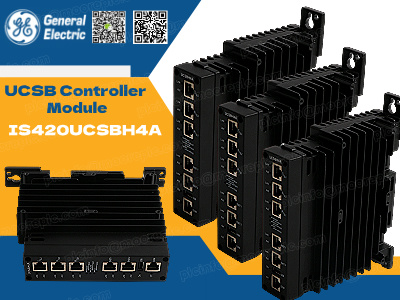
    Understanding the GE IS420UCSBH4A Controller in the Mark VIe Series
    March 06, 2025

    Introduction to the GE IS420UCSBH4A Controller The GE IS420UCSBH4A controller is an essential component in the Mark VIe Turbine Control System Series, designed by General Electric. This particular printed circuit board (PCB) is part of a series developed for managing gas, steam, and wind turbine automated drive assemblies. As one of the final iterations of GE's Speedtronic control system technology, the IS420UCSBH4A holds a key position in turbine control and automation, making it a crucial asset for many industries relying on these systems. Key Features of the IS420UCSBH4A Controller The IS420UCSBH4A controller is characterized by its 1066 MHz EP80579 Intel processor, ensuring high processing capabilities for turbine control operations. It operates in an ambient temperature range of -30°C to +65°C, providing flexibility for various environments. This makes it suitable for use in a wide range of turbine applications, from harsh industrial settings to more controlled environments. One of the standout features of this controller is its flash memory, which can be easily updated based on the user's specific needs. This ensures that the device remains adaptable to future technological upgrades and system requirements. Moreover, its certification for both hazardous and non-hazardous locations, including UL E207685 and UL DEMKO 12 ATEX 1114875X, allows it to be deployed in diverse industries and settings. Comparing the IS420UCSBH4A to Other Mark VIe Controllers While the IS420UCSBH4A is similar to other controllers in the Mark VIe series, such as the UCSC controller, there are notable differences. The primary distinction lies in the hardware; the IS420UCSBH4A is a single-module design, which simplifies installation and maintenance. Despite these hardware differences, both controllers share several advantages, including reliability, ease of use, and adaptability. This controller series, like its counterparts, leverages GE's Speedtronic control system technology, which significantly boosts the demand for these products across the market. This robust technology helps optimize turbine performance, ensuring better control and management. The Importance of the IS420UCSBH4A in Industrial Automation The IS420UCSBH4A's role in industrial automation cannot be overstated. It is a vital component in the smooth and efficient operation of turbine systems. With its ability to integrate into a variety of turbine applications, including those for gas, steam, and wind turbines, it ensures precision control in automated drive systems. Its high-performance features and certifications make it a versatile choice for industries that require reliable and safe turbine control solutions. How the IS420UCSBH4A Meets Safety and Regulatory Standards In terms of safety, the IS420UCSBH4A is designed to meet the rigorous standards necessary for operation in hazardous environments. With certifications from UL and ATEX, this controller can be deployed in challenging settings without comp...

    Read More
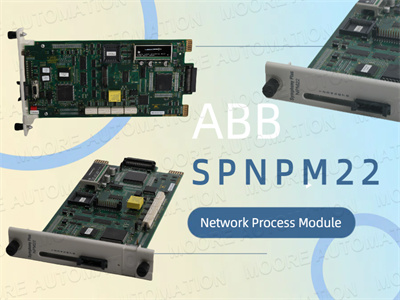
  • ABB SPNPM22 Network Process Module: A Reliable Industrial Solution
    ABB SPNPM22 Network Process Module: A Reliable Industrial Solution
    March 04, 2025

    Introduction The ABB SPNPM22 Network Process Module is a high-performance component designed to enhance industrial automation and networking. With its compact dimensions of 3.5 x 32.2 x 17.5 cm and a lightweight build of 0.28 kg, this module is a crucial part of many industrial control systems. Key Features of the ABB SPNPM22 Module The ABB SPNPM22 is built for efficiency and reliability in demanding industrial environments. Key features include: Compact and Lightweight: Its small size allows easy integration into control panels and systems without taking up excessive space. Optimized Networking Capabilities: This module ensures seamless communication within industrial networks, improving efficiency. High-Quality Construction: Designed to withstand challenging environments, ensuring durability and long-term use. Applications of the ABB SPNPM22 Module The SPNPM22 module is commonly used in industries requiring precise control and real-time data processing. Some key applications include: Power Plants: Helps in monitoring and controlling power distribution. Manufacturing Units: Ensures smooth automation and networking of industrial machinery. Oil & Gas Industry: Supports critical control processes in harsh environments. Installation and Compatibility The ABB SPNPM22 module is designed for easy installation and compatibility with ABB’s range of industrial automation products. Key points to consider: Plug-and-Play Design: Simplifies the setup process for engineers. Seamless Integration: Works efficiently with other ABB modules and systems. Minimal Maintenance: Requires little upkeep, reducing operational downtime. Advantages of Using ABB SPNPM22 Why choose the ABB SPNPM22 over other network process modules? Reliable Performance: Ensures stable communication in complex industrial networks. Space-Saving Design: Its compact size makes it ideal for space-constrained installations. Lightweight Yet Sturdy: At just 0.28 kg, it is easy to handle while maintaining durability. Conclusion The ABB SPNPM22 Network Process Module is an essential component for industries seeking reliable, efficient, and easy-to-install networking solutions. With its compact build, robust performance, and seamless integration capabilities, it is a valuable asset in modern industrial automation. Whether for power plants, manufacturing, or oil and gas operations, this module offers unparalleled reliability and efficiency.

    Read More
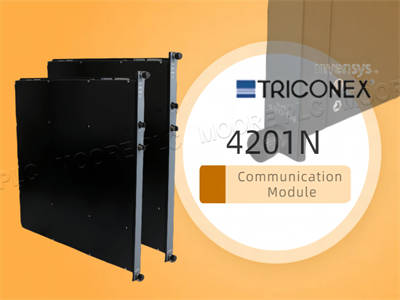
  • TRICONEX 4201N Communication Module: A Reliable Solution for Industrial Automation
    TRICONEX 4201N Communication Module: A Reliable Solution for Industrial Automation
    March 01, 2025

    Introduction to the TRICONEX 4201N Communication Module In the world of industrial automation, seamless and reliable communication is crucial for ensuring efficiency and safety. The TRICONEX 4201N Communication Module is a high-performance solution designed to facilitate secure data transmission across various automation systems. This article explores the key features, benefits, and applications of this advanced communication module. Key Features of the TRICONEX 4201N Communication Module The TRICONEX 4201N is engineered to deliver exceptional communication capabilities in demanding industrial environments. Some of its standout features include: Compact Design: Measuring 2.2 x 40.5 x 40 cm, the module is designed to fit seamlessly into industrial setups without occupying excessive space. Lightweight Build: Weighing only 1.88 kg, it is easy to handle and install. Reliable Data Transmission: The module ensures secure and uninterrupted data exchange, reducing the risk of communication failures. High Compatibility: Designed to integrate effortlessly with other Triconex safety and control systems. Durable Construction: Built to withstand harsh industrial conditions, ensuring long-term performance and reliability. Benefits of Using the TRICONEX 4201N Communication Module The TRICONEX 4201N offers several advantages that make it a preferred choice for industrial automation: Enhanced System Reliability: Ensures continuous and error-free data flow, minimizing downtime. Improved Safety: Facilitates efficient monitoring and control of industrial processes, enhancing overall safety. Easy Integration: Compatible with various control and safety systems, allowing for seamless implementation. Cost-Effective Solution: Its durability and efficiency reduce maintenance costs and operational disruptions. Optimized Performance: Delivers high-speed communication, ensuring smooth and efficient operations. Common Applications of the TRICONEX 4201N Communication Module The TRICONEX 4201N is widely used across multiple industries that require reliable communication systems. Some of the key applications include: Oil and Gas Industry: Ensuring safe and efficient operations in drilling, refining, and distribution. Power Plants: Supporting communication in power generation and distribution systems. Manufacturing: Enhancing automation processes in factories and production lines. Chemical Processing: Ensuring accurate data exchange for process control and safety systems. Water Treatment Facilities: Monitoring and controlling essential water purification and distribution processes. How to Install and Maintain the TRICONEX 4201N Communication Module Proper installation and maintenance are essential to maximize the performance and lifespan of the TRICONEX 4201N. Here are some key steps to follow: Installation: Ensure compatibility with existing systems before installation. Secure the module properly in the designated slot. Connect the necessary cables and verify all connections. Ma...

    Read More
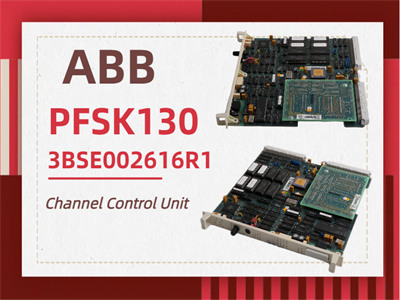
  • ABB PFSK130 3BSE002616R1 Channel Control Unit: A Comprehensive Guide
    ABB PFSK130 3BSE002616R1 Channel Control Unit: A Comprehensive Guide
    February 27, 2025

    Introduction The ABB PFSK130 3BSE002616R1 is a high-performance channel control unit designed for industrial automation systems. With its compact design and reliable functionality, this unit plays a crucial role in ensuring smooth operations across various control applications. In this article, we’ll explore its features, specifications, applications, and benefits. Key Features of ABB PFSK130 3BSE002616R1 ABB has engineered the PFSK130 3BSE002616R1 to meet the rigorous demands of industrial environments. Some of its standout features include: Compact Design: Measuring 2x24.8x24.4 cm, this unit fits seamlessly into control panels. Lightweight Structure: Weighing only 0.58 kg, it is easy to install and handle. Robust Performance: Designed for efficient and reliable control of multiple channels. Compatibility: Works seamlessly with ABB automation systems, ensuring integration with existing setups. Durability: Built to withstand industrial conditions, offering long-term operational reliability. Technical Specifications Understanding the technical details of the ABB PFSK130 3BSE002616R1 is crucial for selecting the right component for your system. Below are the key specifications: Model Number: PFSK130 3BSE002616R1 Dimensions: 2x24.8x24.4 cm Weight: 0.58 kg Function: Channel control unit for industrial automation Manufacturer: ABB These specifications highlight the unit’s compact yet powerful design, making it an essential part of industrial automation setups. Applications of ABB PFSK130 3BSE002616R1 The ABB PFSK130 3BSE002616R1 is widely used across different industrial sectors due to its precision and reliability. Common applications include: Manufacturing Plants: Helps in controlling multiple channels within production lines. Power Plants: Supports automation in energy management and distribution. Process Industries: Used in chemical, oil & gas, and pharmaceutical industries for process automation. Industrial Automation Systems: Plays a crucial role in programmable logic controllers (PLCs) and distributed control systems (DCS). Benefits of Using ABB PFSK130 3BSE002616R1 Integrating the ABB PFSK130 3BSE002616R1 into your automation system comes with several advantages: Improved Efficiency: Enhances process control, reducing downtime and operational inefficiencies. Reliable Performance: ABB’s advanced engineering ensures consistent and stable functionality. Easy Installation: Its lightweight and compact design simplify the installation process. Long-Term Durability: Built to withstand harsh industrial environments, offering extended service life. Seamless Integration: Works efficiently with other ABB components, ensuring a smooth and efficient automation system. Conclusion The ABB PFSK130 3BSE002616R1 Channel Control Unit is a vital component in industrial automation, offering a compact, lightweight, and durable solution for controlling multiple channels. With its superior performance, compatibility, and ease of use, it is an ideal choice for var...

    Read More
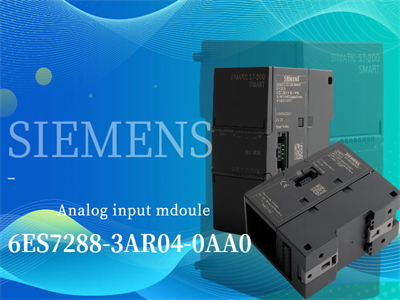
  • Siemens 6ES7288-3AR04-0AA0 Analog Input Module: A Reliable Choice for Industrial Automation
    Siemens 6ES7288-3AR04-0AA0 Analog Input Module: A Reliable Choice for Industrial Automation
    February 25, 2025

    Overview of Siemens 6ES7288-3AR04-0AA0 The Siemens 6ES7288-3AR04-0AA0 is a high-performance analog input module designed for industrial automation systems. With its compact size and lightweight design, it offers an efficient solution for integrating analog signals into a PLC system. This module is well-suited for industries requiring precise measurement and control, ensuring seamless data acquisition for automation processes. Key Features and Specifications The Siemens 6ES7288-3AR04-0AA0 module comes with several notable features that make it a valuable addition to industrial control systems. Compact Dimensions: Measuring 5.5x8x10 cm, this module is designed for easy installation in control panels with limited space. Lightweight Design: Weighing only 0.18 kg, it is easy to handle and integrate into existing automation setups. Reliable Analog Input Processing: It ensures accurate signal conversion for optimal performance in industrial applications. Seamless Integration: The module is compatible with Siemens PLC systems, making it a versatile choice for different automation environments. Applications in Industrial Automation The Siemens 6ES7288-3AR04-0AA0 module is widely used in various industries, including manufacturing, energy, and process automation. Some of its common applications include: Process Monitoring: Helps collect and process analog signals from sensors for real-time monitoring of temperature, pressure, and other critical parameters. Machine Control: Ensures precise control of machinery by integrating analog inputs for automation systems. Data Acquisition: Facilitates smooth data transmission to PLCs, allowing operators to analyze and optimize industrial processes. Installation and Compatibility Installing the Siemens 6ES7288-3AR04-0AA0 is straightforward, thanks to its user-friendly design and Siemens' reliable engineering. The module is compatible with Siemens PLCs, ensuring hassle-free integration into existing automation networks. Proper wiring and configuration are essential to maximize performance and efficiency in industrial applications. Why Choose Siemens 6ES7288-3AR04-0AA0? There are several reasons why the Siemens 6ES7288-3AR04-0AA0 is a preferred choice for industrial automation: High Precision: Provides accurate analog input processing for critical applications. Compact and Lightweight: Designed for space-saving installation without compromising performance. Siemens Quality Assurance: Backed by Siemens' reputation for reliability and durability in industrial automation products. Cost-Effective Solution: Offers a balance of performance and affordability for businesses looking to optimize their automation systems. Conclusion The Siemens 6ES7288-3AR04-0AA0 analog input module is a reliable and efficient solution for industrial automation needs. Its compact size, lightweight design, and seamless compatibility with Siemens PLC systems make it an excellent choice for businesses looking to enhance their automation processes. Wh...

    Read More
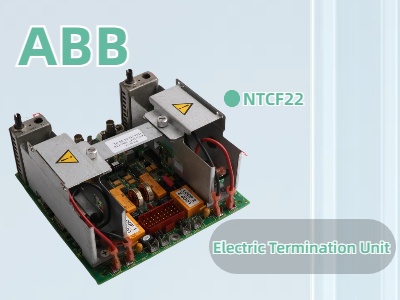
  • Understanding the ABB NTCF22 Optic-to-Electric Termination Unit
    Understanding the ABB NTCF22 Optic-to-Electric Termination Unit
    February 25, 2025

    Introduction The ABB NTCF22 is an essential component in industrial automation, serving as an optic-to-electric termination unit (TU) for the INFI-Net system. This piece of equipment plays a critical role in converting optical signals into electric signals, ensuring smooth communication within automation networks. In this article, we’ll break down its specifications and discuss its importance in modern industrial applications. Key Specifications The ABB NTCF22 comes with several key features that make it highly reliable and efficient in automation systems. Here are its main specifications: Core Credit: 0.00 Customs Tariff Number: 8517700000 Gross Weight: 5.2 kg Invoice Description: INFI-Net Optic-to-Electric TU Medium Description: Optic-to-Electric Termination Unit Made To Order: No Minimum Order Quantity: 1 EA Order Multiple: 1 EA These technical details highlight its role as a specialized unit in converting optic signals into electric signals, helping integrate various network components seamlessly. Usage and Applications The ABB NTCF22 is designed to interface with optical communication systems, specifically used in industrial networks like INFI-Net. These networks are commonly found in process control, automation, and large-scale industrial systems. Its role as an optic-to-electric termination unit ensures that optical fibers can be connected to electronic devices without compromising signal integrity. Its application spans industries such as manufacturing, energy, and utility services, where maintaining continuous and efficient communication is critical. Why Choose ABB NTCF22 for Your Industrial Network? When integrating or upgrading industrial automation networks, selecting the right termination unit is crucial. The ABB NTCF22 stands out because of its reliability, ease of integration, and minimal maintenance needs. It ensures that optical networks work effectively, even in harsh industrial environments. With its robust design and high-quality performance, the ABB NTCF22 provides businesses with a reliable solution to enhance their network infrastructure, offering both cost-effectiveness and operational efficiency. Conclusion The ABB NTCF22 is a vital component for ensuring smooth communication in industrial automation systems. Its role as an optic-to-electric termination unit allows businesses to build efficient and reliable networks. Whether you're setting up new networks or upgrading existing ones, the ABB NTCF22 provides a solution that meets high standards of performance and reliability. 

    Read More
1 ... 16 17 18 19 20 ... 32
A total of  32  pages

News & Blogs

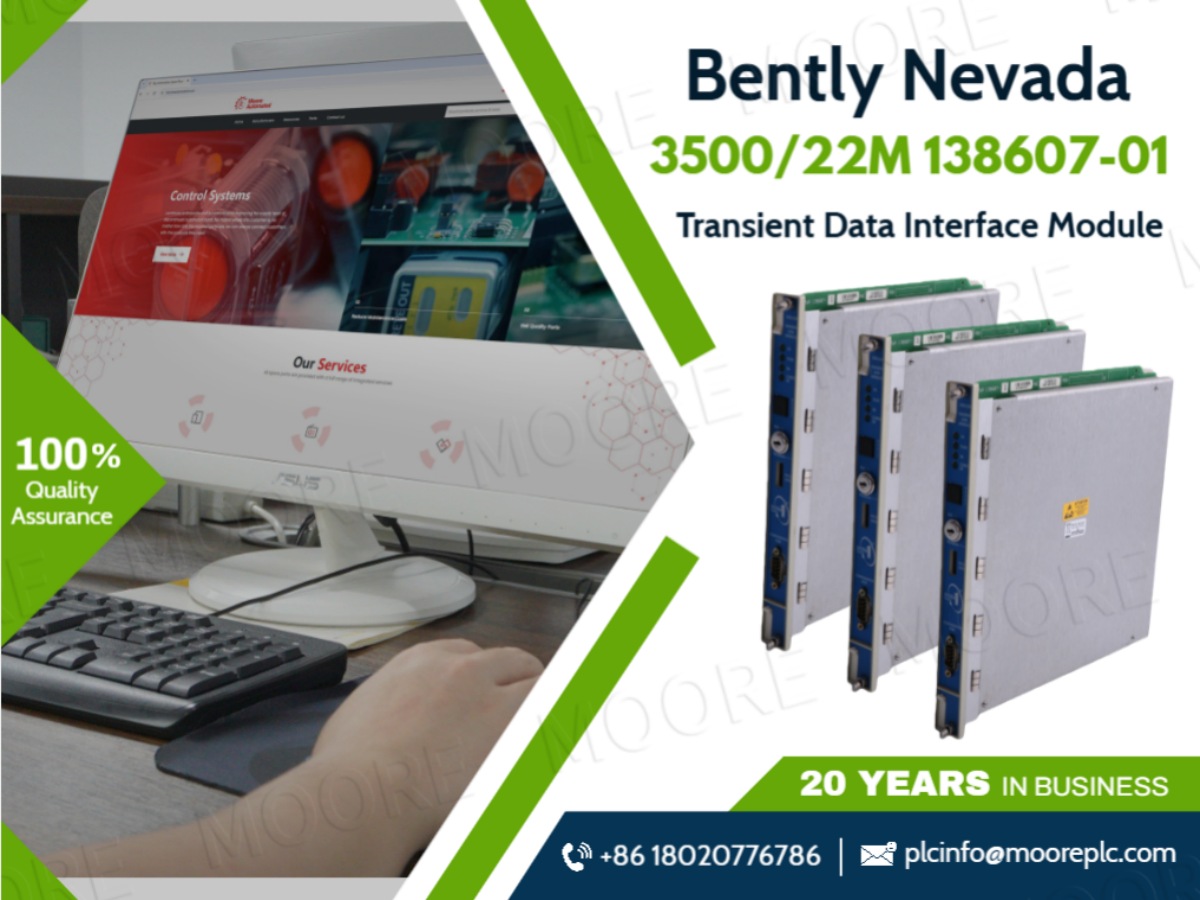
  • How Bently Nevada’s 3500/22M TSI Module Optimizes Industrial Equipment Monitoring 20/01

    2026

    How Bently Nevada’s 3500/22M TSI Module Optimizes Industrial Equipment Monitoring
    Overview of the Bently Nevada 3500/22M 138607-01 TSI Module Within facilities operating critical rotating machinery, continuous condition monitoring is essential for preventing costly failures. The Bently Nevada 3500/22M 138607-01 Transient Data Interface (TSI) Module fulfills this need, operating as a dedicated component within a Turbine Supervisory Instrumentation (TSI) system. By capturing and processing dynamic operational data from equipment, it enables the early detection of mechanical degradation before performance is impacted. This function is key to maintaining asset reliability and operational continuity in mission-critical industrial processes. Durable by design, the module directly supports more strategic maintenance and performance management. Its provision of precise, actionable diagnostics allows facilities to curtail unplanned outages and advance operational productivity across key sectors. Why the Bently Nevada 3500/22M Module is Ideal for Industrial Machinery This TSI module is tailored for the rigorous realities of industrial operation, delivering indispensable oversight for turbine and compressor health. It interprets a comprehensive set of machinery parameters, empowering teams to recognize developing faults during initial stages. Consuming only 10.5 Watts, the unit offers advanced analytical functionality with minimal energy expenditure. Its construction permits reliable service in environments from -30°C to +65°C, with high humidity tolerance. This operational robustness guarantees consistent performance in the most severe plant conditions, enabling round-the-clock condition evaluation and data-driven maintenance planning. Core Features of the Bently Nevada 3500/22M TSI Module A defining feature is the module's ability to connect with an array of sensors monitoring vital machine components, collecting crucial data that informs asset management strategy. Its operational integrity is reinforced through flawless interaction with other Turbine Supervisory Instrumentation components in a unified monitoring scheme. Additionally, the module is architected for simplified incorporation into current monitoring infrastructures. This allows for a straightforward enhancement of diagnostic capabilities, avoiding the need for complex system overhauls and the associated operational interference. How the 3500/22M Module Enhances Preventive Maintenance The module transforms preventive maintenance by delivering continuous evaluation of transient machinery behavior. It alerts operators to subtle changes, such as shifts in vibrational patterns, facilitating corrective measures long before a breakdown might occur. This forward-looking strategy is bolstered by assured access to authentic TSI spare parts, which enables rapid restoration or modernization of the monitoring system. Such proactive oversight directly extends machinery lifespan and dramatically lowers the incidence of disruptive, unscheduled downtime. The Role of the 3500/22M Module in ...
    All News
  • How GE Strengthens Industrial Reliability with the IS200EHPAG1DAB Gate Pulse Amplifier Board 13/01

    2026

    How GE Strengthens Industrial Reliability with the IS200EHPAG1DAB Gate Pulse Amplifier Board
    What Is the GE IS200EHPAG1DAB Gate Pulse Amplifier Board and Why It Matters For customers operating complex industrial automation systems, reliability is not optional—it is essential. The GE IS200EHPAG1DAB Gate Pulse Amplifier Board is a critical component designed for GE drive and control systems, especially in high-demand industrial environments. Its main function is to amplify and distribute gate pulses accurately, ensuring that power devices such as IGBTs or thyristors switch correctly and safely. From a customer’s perspective, the value of the IS200EHPAG1DAB lies in its ability to minimize system instability. Inconsistent gate pulses can lead to overheating, unplanned downtime, or even catastrophic equipment failure. By choosing genuine GE industrial automation parts, customers gain confidence that their systems will operate within design specifications, protecting both assets and productivity. Why Customers Choose GE for Industrial Automation Parts When it comes to industrial spare parts, customers often face a dilemma: cost versus reliability. GE has built a global reputation by offering automation components that balance performance, durability, and long-term support. The IS200EHPAG1DAB Gate Pulse Amplifier Board is no exception, as it is engineered to integrate seamlessly into existing GE control architectures. Customers benefit from reduced troubleshooting time because GE parts are designed with system compatibility in mind. This means less guesswork during maintenance and fewer integration risks. For companies managing large-scale operations, using trusted GE spare parts management strategies ensures consistent performance across multiple sites and reduces the risk associated with mixed or unverified components. How the IS200EHPAG1DAB Solves Common Operational Challenges Many industrial customers struggle with aging equipment, limited spare part availability, and increasing maintenance costs. The GE IS200EHPAG1DAB addresses these challenges by offering stable signal amplification and long service life, even in harsh operating conditions. This reliability directly translates into fewer shutdowns and more predictable maintenance schedules. From a solution-oriented viewpoint, integrating this board into a broader industrial spare parts management plan can significantly improve operational efficiency. Keeping critical components like the IS200EHPAG1DAB in stock allows maintenance teams to respond quickly to failures, reducing mean time to repair (MTTR) and protecting production output. This proactive approach is especially valuable in industries such as power generation, oil and gas, and heavy manufacturing. Where the GE IS200EHPAG1DAB Fits in Spare Parts Management Strategies Effective spare parts management is no longer just about storage—it is about strategy. Customers who rely on industrial automation parts must identify which components are critical to uptime. The IS200EHPAG1DAB is often classified as a high-priority spare because its...
    All News
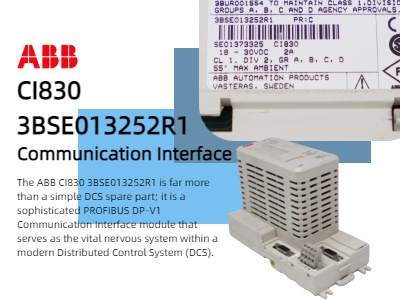
  • Why do engineers worldwide choose the ABB CI830 3BSE013252R1? 13/01

    2026

    Why do engineers worldwide choose the ABB CI830 3BSE013252R1?
    Product Description: The ABB CI830 as a Critical DCS Communication Module The ABB CI830 3BSE013252R1 is far more than a simple DCS spare part; it is a sophisticated PROFIBUS DP-V1 Communication Interface module that serves as the vital nervous system within a modern Distributed Control System (DCS). Designed to integrate seamlessly into ABB’s IndustrialIT or Symphony Plus DCS architecture, this module operates within the system's field control station (I/O station), managing high-speed, deterministic data exchange between the controller and PROFIBUS field devices. As a core component of the data communication system, it exemplifies the DCS's open architecture, providing a crucial, multi-layered open data interface that bridges central control with the process periphery. Choosing the genuine CI830 as a Distributed Control System replacement part ensures this critical communication link remains robust and fully functional. Key Product Features & Technical Specifications Engineered for performance in demanding environments, the ABB CI830 3BSE013252R1 embodies the principle that DCS hardware must possess "high reliability in harsh industrial sites, be easy to maintain, and feature advanced technology." High Reliability & Robust Design: Built with state-of-the-art (craftsmanship), it withstands industrial extremes, ensuring stable communication where it matters most, directly supporting the DCS's overall hardware reliability. PROFIBUS DP-V1 Master: Provides full support for advanced PROFIBUS features, including acyclic communication for parameterization and diagnostics, enhancing control and maintenance capabilities. Seamless DCS Integration: The module is natively compatible with ABB's engineering and operational software environment, extending the power of the system'sunderlying software platform. This integration allows for easy configuration and supports complex control strategies. Application Areas: Where the CI830 Module Drives Efficiency As a versatile DCS module, the ABB CI830 3BSE013252R1 is indispensable in industries that rely on PROFIBUS networks for decentralized, high-speed control within a centralized DCS framework. Power Generation: Integrating turbine auxiliaries, boiler feed systems, and smart motor control centers into the main DCS for unified monitoring and control. Water & Wastewater Treatment: Connecting distributed pumps, valve actuators, and flow meters across large plant sites back to the central Operator Station. Chemical & Process Industries: Enabling communication between the DCS and batch weighing systems, packaging lines, or material handling systems using PROFIBUS. Pulp & Paper: Coordinating drives, sensors, and specialized machinery on a high-speed production line. In these applications, the CI830 ensures that data from thousands of field points flows reliably to the Human-Machine Interface, enabling informed, real-time decision-making. Benefits of Choosing the ABB CI830 3BSE013252R1 Triple Assurance...
    All News
  • Moore is with you on this special Christmas day. 13/01

    2025

    Moore is with you on this special Christmas day.
    A Seaside Gathering The annual Moore Company Christmas celebration was held by the sea, transcending the traditional office party and reflecting our commitment to creating a genuine atmosphere and strengthening connections. On the tranquil beach, colleagues, their families, and friends gathered on a crisp winter afternoon, immersed in the festive joy and shared anticipation of an unforgettable evening. The Pulse of the Celebration: Live Music and Song As the sun set, cheerful holiday music filled the air. Live music added a wonderful atmosphere, with a talented guitarist setting the tone for the evening. It wasn't just background music; it was a heartfelt invitation. Soon, everyone sang along, dancing and singing on the lawn, creating a beautiful scene. The Lawn Celebration The most magical moment occurred naturally. The captivating guitar chords drew people in, and everyone naturally formed a circle around the guitarist. Laughter filled the air as people held hands and twirled around him. This simple yet joyful gesture became the heart of the celebration, perfectly embodying the MoorePLC family. The infectious laughter brought everyone closer together. Seaside Getaway After the buffet, everyone headed to the beach to enjoy the beautiful evening view, lovely music, and the company of friends. They also participated in a spectacular fireworks display. These experiences built trust, improved communication, and created a series of positive shared memories; the beautiful fireworks left an indelible mark on everyone's hearts. Celebrating Our Culture of Connection and Gratitude This event vividly reflected our company culture. It was our way of thanking every team member and their family for their hard work. We chose a unique, engaging, and welcoming venue to express our respect and gratitude to every employee. The wonderful Christmas event brought joy and relaxation to everyone. Christmas activities concluded successfully The MoorePLC Seaside Christmas Celebration was more than just a holiday party; it fully demonstrated the vibrant community we've built together. As the music faded and the dancers dispersed, the warmth and camaraderie lingered. As we return to our homes and resume our daily lives, our hearts are filled with the echoes of shared songs, memories of collective laughter, and a surge of enthusiasm for the new year. May this festive spirit continue—MoorePLC wishes you a happy holiday! Hot Recommendations Bently Nevada 330102-02-12-50-01-00 EMERSON KJ4110X1-BC1 12P1869X012 Bently Nevada 330101-02-12-05-01-CN EMERSON KJ4110X1-BA1 12P1867X012 Bently Nevada 330907-05-30-70-02-CN/05 EMERSON KJ4002X1-BF2 12P3866X012 Bently Nevada 330910-00-19-05-01-00/CN EMERSON KJ4001X1-NB1 12P3368X022 Bently Nevada 330905-00-12-05-01-00/CN EMERSON KJ4001X1-NB1 12P3368X012 Bently Nevada 330910-00-22-10-02-05/CN EMERSON KJ4001X1-NB1 12P3368X012 Bently Nevada 330910-00-22-10-01-00/CN EMERSON KJ4001X1-NA1 12P3373X032
    All News
  • What Makes ICS Triplex a Game Changer in Safety Control Systems? 22/01

    2026

    What Makes ICS Triplex a Game Changer in Safety Control Systems?
    Reliable Safety for Critical Operations In high-risk industries, even small failures can have major consequences. ICS Triplex’s triple modular redundancy (TMR) ensures that operations continue smoothly, even if a component fails. This built-in reliability allows maintenance teams to focus on preventive care. Customers gain confidence through fewer unplanned shutdowns and compliance with strict safety standards. Long-Term System Support Aging Distributed Control Systems are a common concern for plant operators. ICS Triplex addresses this by offering long-term support and compatibility with existing systems. Customers can upgrade safely without replacing their entire DCS. Additionally, access to dependable Distributed Control System replacement parts ensures that older systems remain functional and efficient, even as components become harder to source. Minimizing Downtime with Redundancy Unexpected stoppages are costly. ICS Triplex reduces risk by allowing continued operation during maintenance or component replacement. Its redundant design keeps production stable and reliable. Partnering with a trusted DCS module supplier gives customers quick access to replacement modules, lowering inventory needs and reducing recovery time when repairs are required. Easier Spare Parts Management Managing DCS spare parts can be challenging, especially for older or discontinued systems. ICS Triplex simplifies this with certified, ready-to-use modules that maintain safety and reliability. For customers, this means predictable maintenance, fewer emergency orders, and peace of mind that performance remains consistent over time. Modernization Without Disruption Many plants prefer incremental upgrades over full replacements. ICS Triplex supports phased modernization, allowing safety controllers to be upgraded independently of the main DCS. Working with a reliable DCS module supplier, customers can integrate ICS Triplex into existing workflows, improving safety and reliability without disrupting operations. Application Areas ICS Triplex is used across industries where uptime and safety are critical, including: Oil and gas (upstream, midstream, downstream) Power generation and utilities Chemical and petrochemical plants Offshore platforms and FPSOs Mining and heavy industry Customers rely on ICS Triplex to protect processes while ensuring consistent access to DCS spare parts and Distributed Control System replacement parts. Hot Recommendations 1747-L553 330881-28-09-080-03-02 1503VC-BMC5 IC693DNM200-BC 330180-X1-CN MOD:145004-13 IS220UCSAH1A 3500/22M 288055-01 330930-065-00-00 IS215UCVEM01A 146031-01 16925-25 T8461C FC-TSDO-0824 9571-30 3500/05-01-02-00-00-01 GX121-TFT8U-F0 MCU1000 SY618 PESK10 6ES54303BA11 SC750
    All Blogs
  • Where Industrial Automation Spare Parts Create the Greatest Value Across Smart Factories 15/01

    2026

    Where Industrial Automation Spare Parts Create the Greatest Value Across Smart Factories
    Understanding Value Creation in Smart Factory Operations From the customer’s point of view, a smart factory is not only about advanced software or connected machines—it is about continuity. Even the most intelligent automation system loses value the moment production stops. Industrial automation spare parts generate their greatest value by protecting daily operations against unexpected failures, especially in environments where equipment is highly integrated and downtime spreads quickly. Customers increasingly recognize that spare parts are no longer a back-end concern. In smart factories, each component supports a larger digital ecosystem. When spare parts planning is aligned with operational goals, customers gain faster recovery times, more stable output, and better control over maintenance costs. This shift transforms spare parts from passive stock into an active reliability tool. Critical Automation Systems Where Spare Parts Matter Most Not all equipment carries the same level of risk. Customers often see the highest exposure in monitoring and protection systems, particularly those linked to rotating machinery. Turbine Supervisory Instrumentation components are essential for measuring vibration, speed, and other operating parameters that directly affect equipment safety and performance. When these components fail or drift out of specification, customers may be forced to shut down systems as a precaution. By prioritizing TSI spare parts and essential TSI modules, customers reduce dependency on emergency sourcing. This targeted approach ensures that the most vulnerable points in automation systems are protected, even during supply chain disruptions. Supporting Predictive Maintenance with the Right Spare Parts Many customers invest heavily in predictive maintenance technologies, expecting earlier fault detection and lower repair costs. However, predictive insights alone do not prevent downtime. The real value appears when alerts can be acted upon immediately, supported by available industrial automation spare parts. For example, when condition monitoring systems signal abnormal turbine behavior, access to compatible TSI modules allows maintenance teams to respond before minor issues escalate. Customers benefit from shorter intervention windows, reduced secondary damage, and better alignment between digital diagnostics and physical maintenance actions. Spare Parts as a Foundation for Long-Term System Compatibility Smart factories rarely operate with uniform, newly installed equipment. Most customers manage a combination of legacy systems and modern automation upgrades. In this environment, compatibility becomes a major concern. Carefully selected industrial automation spare parts help maintain consistent performance across different system generations. Customers using Turbine Supervisory Instrumentation components often face long equipment lifecycles. Instead of full system replacement, they rely on strategic spare parts stocking to extend servic...
    All Blogs
  • Why Emerson's Smart Sensors Are Revolutionizing Factory Efficiency 09/01

    2026

    Why Emerson's Smart Sensors Are Revolutionizing Factory Efficiency
    Unlocking Real-Time Operational Insights Factories today must oversee numerous machines, each requiring monitoring to ensure smooth function. Emerson’s sensors directly support this need, capturing continuous data on critical factors such as vibration, pressure, and temperature shifts. This constant feed offers an immediate and accurate picture of equipment health. Linking this information through compatible Distributed Control System replacement parts creates a connected data network across system modules. This connectivity allows personnel to catch emerging concerns sooner, supporting proactive maintenance that helps avoid unexpected line stoppages. Reducing Downtime with Predictive Alerts Sudden machine breakdowns lead to expensive interruptions and schedule delays. Emerson’s technology helps plants move from reactive repairs to a predictive model. The sensors analyze operational data over time, spotting patterns that may indicate a future component failure. With this advance notice, maintenance can be planned during normal downtime. To make this strategy work, keeping essential DCS spare parts on hand and working with a reliable DCS module supplier is key. This setup enables quick, scheduled replacement of parts the sensors identify as nearing end-of-life, minimizing unplanned outages. Boosting Energy Efficiency and Process Control Controlling energy use and maintaining process stability are vital for both cost management and product quality. Emerson’s sensors deliver the detailed measurements needed to find and correct inefficiencies. When integrated with the plant’s automation controls via appropriate Distributed Control System replacement parts, this data can trigger automatic refinements. For instance, it can adjust motor output, optimize thermal settings, or balance system pressure—fine-tuning operations for better efficiency without manual input. Easy Integration with Existing Systems Adding new technology to an operational plant should not cause disruption. Emerson’s smart sensors are built for straightforward compatibility with common control platforms, ensuring they communicate effectively with other system modules. This ease of integration is especially beneficial for facilities that use DCS spare parts, as it simplifies upgrades. Plants can enhance their monitoring capabilities step-by-step, avoiding large-scale system changes that require lengthy production halts. Long-Term Reliability and Planning Maintaining consistent output requires looking ahead, not just responding to problems. The ongoing monitoring from Emerson’s sensors supplies the information needed for this forward view. Teams can better predict when parts will wear out and schedule replacements in advance. To execute this planned maintenance smoothly, sourcing genuine Distributed Control System replacement parts from an experienced DCS module supplier is crucial. A trusted supplier ensures high-quality components are available when needed, supporting reliable performa...
    All Blogs
  • Where Artificial Intelligence Meets Real-World Grids in ABB's Latest Software. 27/12

    2025

    Where Artificial Intelligence Meets Real-World Grids in ABB's Latest Software.
    The modern power grid is undergoing a radical transformation. With the influx of volatile renewable energy and soaring demand, the need for stability has never been greater. At the heart of this challenge lies a critical question: how do we infuse cutting-edge Artificial Intelligence into the physical world of electricity without compromising the rock-solid reliability that keeps our lights on and factories running? Drawing inspiration from the decades-proven reliability principles of industrial Distributed Control Systems (DCS), ABB's latest software is providing the answer. It's not just about smart algorithms; it's about building an inherently resilient digital nervous system for the grid. The Foundational Pillar: Lessons from Industrial DCS Reliability Before a single line of AI code is written, the foundation must be unshakable. In mission-critical industrial environments, DCS platforms are engineered with a relentless focus on reliability to ensure continuous, safe operation. This philosophy is built on four core principles: Fault Prevention (designing systems not to fail), Fault Security & Weakening (minimizing impact when failure occurs), Fault Tolerance (allowing systems to operate through a fault), and Online Maintenance (repairing without shutdown). ABB’s approach to grid software starts here, applying these hardened industrial reliability concepts to the complex, sprawling domain of energy networks, ensuring that the digital layer is as dependable as the physical infrastructure it manages. Fault Prevention: AI as the Proactive Guardian The first line of defense is preventing problems before they start. ABB’s latest software leverages AI and machine learning for predictive analytics, moving far beyond traditional threshold-based alarms. By continuously analyzing vast streams of grid data—from transformer temperatures to line congestion patterns—the software can identify subtle anomalies and trends that foretell equipment stress or instability. This allows grid operators to shift from reactive "fighting fires" to proactive "preventing sparks." It’s the digital embodiment of fault prevention, using AI to anticipate and mitigate issues, thereby reducing the statistical probability of system failure and extending asset life. Fault Tolerance and Security: Ensuring Graceful Degradation When an unexpected event occurs—a sudden loss of a solar farm due to cloud cover or a line fault—the system must respond intelligently to contain the impact. ABB’s software employs AI-driven grid automation and islanding schemes that can automatically reconfigure network flows in milliseconds, isolating disturbances and preventing cascading blackouts. This is fault tolerance and security in action. The AI doesn’t just monitor; it executes controlled, pre-validated responses to maintain overall grid stability, ensuring that a localized problem remains localized—a concept of "fault weakening" critical for modern, distributed grids. Enabling the Self-Healing ...
    All Blogs
leave a message
If you are interested in our products and want to know more details,please leave a message here,we will reply you as soon as we can.
submit

Our hours

Mon 11/21 - Wed 11/23: 9 AM - 8 PM
Thu 11/24: closed - Happy Thanksgiving!
Fri 11/25: 8 AM - 10 PM
Sat 11/26 - Sun 11/27: 10 AM - 9 PM
(all hours are Eastern Time)
Contact Us:+86 18020776786

Home

Products

whatsApp

Contact Us